Race Report
A personal look at my Mont-Tremblant 70.3 journey, from first stroke to final stride.
Introduction
On September 9, 2025, my 40th birthday, I made a decision that would completely change the way I spent the next ten months. That day, I signed up for two races:
IRONMAN 70.3 Mont-Tremblant
IRONMAN 140.6 Ottawa
At the time, I had never completed a triathlon. I wasn’t a swimmer. I had never raced a swim-bike-run event of any kind. In fact, I had barely ever combined two sports together in training. What I did have was a cycling background, a willingness to learn, and a desire to challenge myself in a way I never had before. To make room for this new goal, I did something I never thought I would do – I quit hockey. For the first time since I was five years old, hockey was no longer part of my life. The sport that had been a constant for more than three decades was replaced by early morning swims, long bike rides, and countless kilometres of (mostly treadmill) running.
Throughout the journey, I received an incredible amount of guidance, encouragement, and mentorship from my friend Jeff. As a veteran of more than twenty IRONMAN races, Jeff had already experienced nearly every mistake, setback, and challenge I was about to encounter. Whether it was training advice, race preparation, nutrition, equipment, or simply helping me stay calm when my confidence disappeared, his influence was a major reason I made it to the start line.
See this video of some of his advice here: https://www.youtube.com/watch?v=dYZw15zVm3c&t=804s
By race week, my biggest concern wasn’t the bike or the run.
It was the swim.
Despite months of training, I had almost no meaningful open-water experience. My longest open-water swim before arriving in Mont-Tremblant was roughly 300 metres, and even that swim involved multiple stops while holding onto my safety buoy. The thought of swimming 1.9 kilometres surrounded by thousands of athletes felt overwhelming.
Race Week In Mont-Tremblant
My race experience was helped enormously by a Father’s Day gift from my wife.
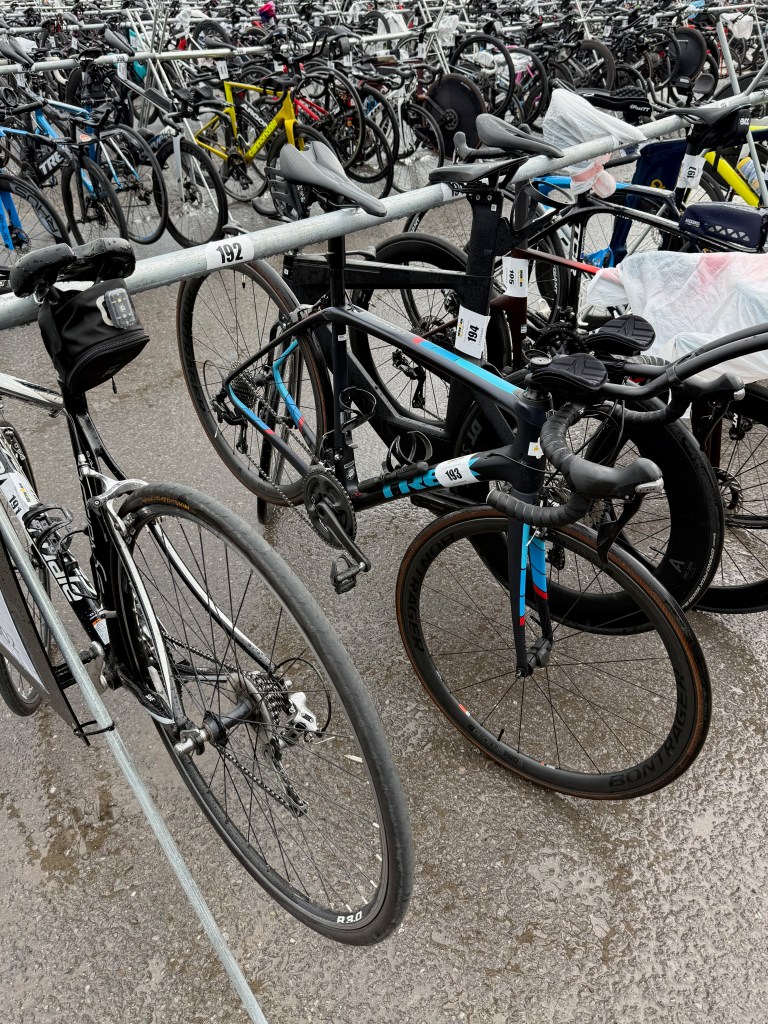
She rented a condo just steps from the Mont-Tremblant village and the location could not have been more perfect. Transition was only a few hundred metres away. On race morning I could walk down to the race site in a matter of minutes, check on my bike, organize my gear, and then casually return to the condo for breakfast.
It removed almost all of the logistical stress that comes with a major race weekend.
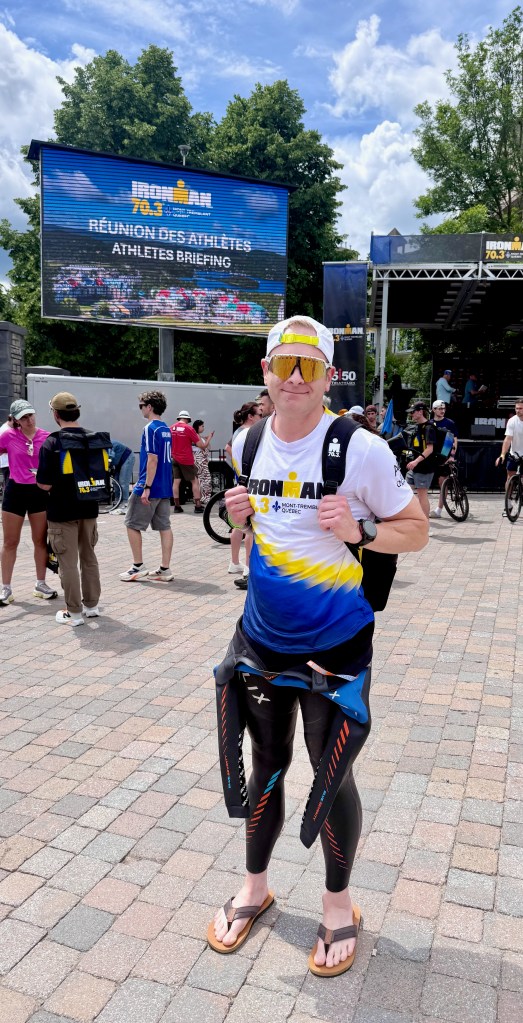
The village itself was exactly what you would hope for from an IRONMAN venue. Everywhere I looked there were athletes carrying bikes with bigger legs than me, checking equipment at all the mechanic tents, and discussing race plans.
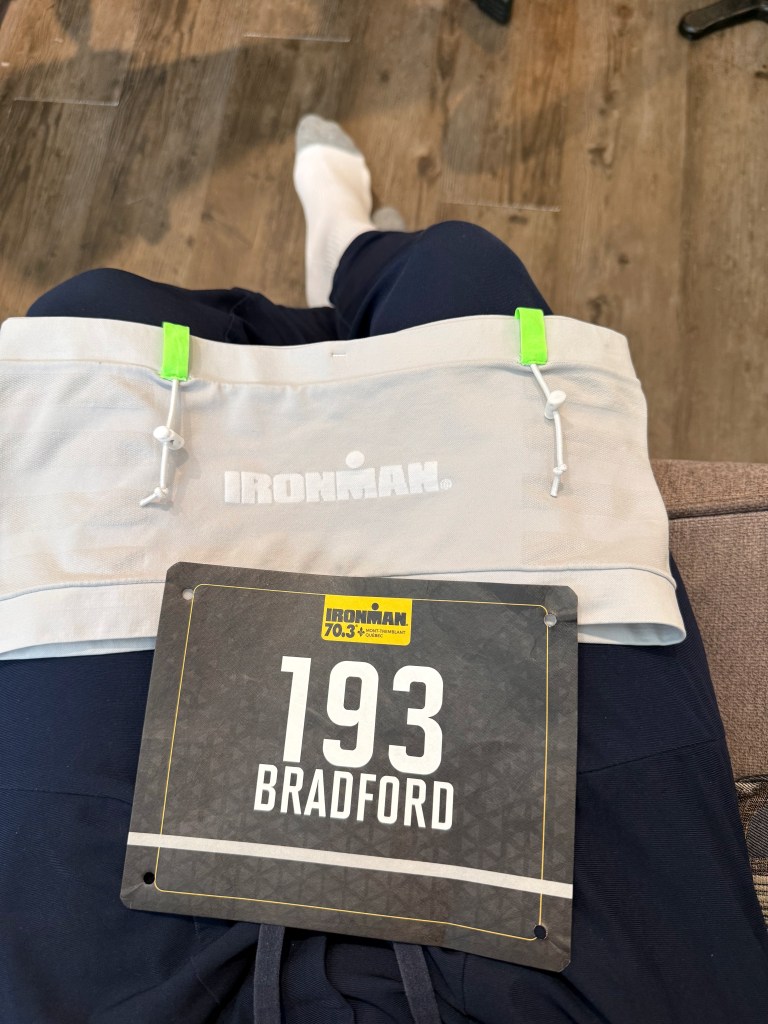
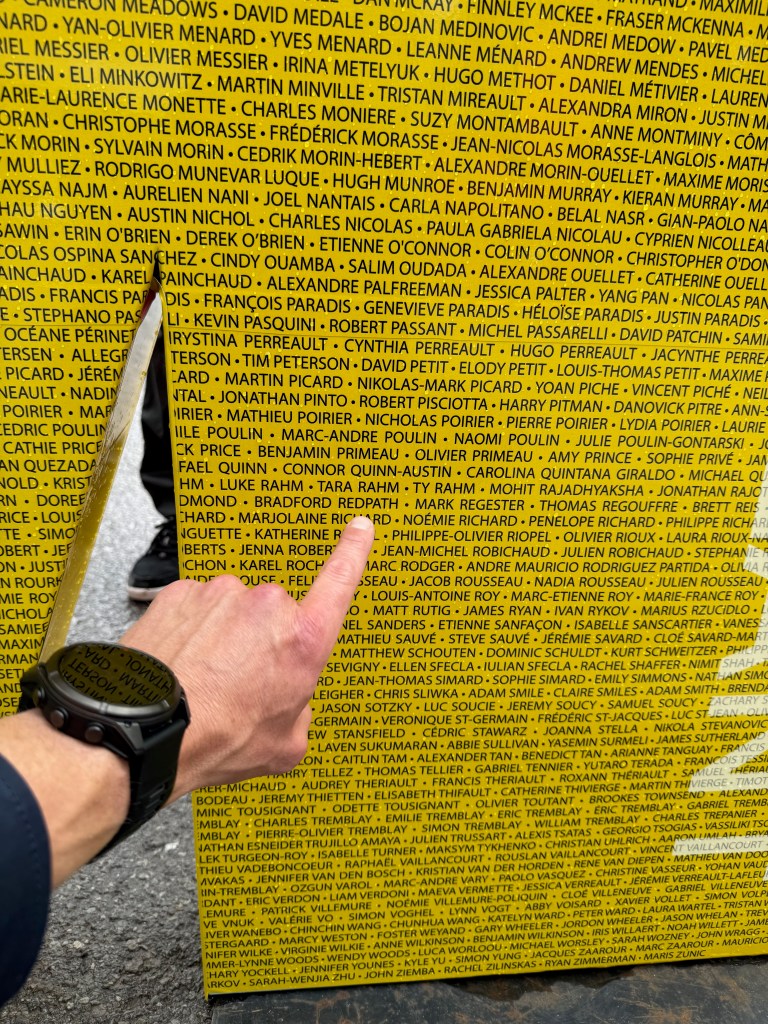
One of my first reminders that I was completely new to this sport came at athlete check-in.
I arrived early and was feeling pretty organized. In fact, I was so organized that I was one of the first people in line.
The only problem was that I was standing in the wrong line.
After waiting for a few minutes, the volunteer looked at me and politely asked:
“Just to confirm… are you a professional athlete?”
It turns out I had lined up at the professional registration desk.
I looked around and quickly realized that nobody else in line seemed particularly nervous about completing the swim.
Needless to say, I was not a professional athlete.
After a brief moment of embarrassment, I picked up my gear and moved to the correct line with the rest of the age-group athletes.
Looking back, it was a pretty fitting start to the weekend. I was completely out of my element and trying to figure things out as I went.
By race week, I was reasonably confident in my cycling fitness and I felt prepared for the run. The swim was a completely different story.
I had very little open-water experience. In fact, most of my swimming had been done in a pool. I had only completed about 4 open-water swims before arriving in Mont-Tremblant.
To make matters worse, my final practice swims before the race did little to build my confidence.
Over the two days leading up to the race, I completed two short open-water sessions in Lac Tremblant. One was only a few hundred metres. The longer swim was roughly 700 metres. During both swims I struggled with anxiety, discomfort, and the unfamiliar feeling of being in open water without lane lines, walls, or easy reference points.
Several times I stopped simply to collect myself.
At that point, the idea of swimming 1.9 kilometres on race morning felt overwhelming.
I spoke with a woman who had experienced similar anxiety in open water. She gave me a simple piece of advice that would ultimately help me enormously during the race.
She told me it was perfectly acceptable to swim with my head up when I needed to. I didn’t have to force myself into perfect freestyle immediately. I could swim head-up for a few strokes, settle down, put my face back in the water, and then repeat the process whenever necessary.
It sounds simple, but it completely changed the way I approached the swim.
Another thing I learned during race week was how easily first-time athletes absorb advice.
Every conversation seemed to contain some new piece of wisdom.
Jeff emphasized the importance of sleep, particularly the night before the night before the race. I took that advice seriously and focused on getting quality rest on Friday.
Ken casually mentioned that chafing was almost inevitable during long-course racing. Somehow my brain translated that into a mission to prevent every possible hot spot on my body, which would later contribute to some spectacularly slow transitions.
Standing in line before the swim start, another athlete passionately explained the benefits of earplugs and how they prevented dizziness and disorientation in the water. Within minutes I had convinced myself that my race might be ruined because I wasn’t wearing them.
Looking back, race week taught me that preparation is important, but confidence is equally important. As a first-time triathlete, I was constantly searching for certainty from other people.
Race Morning: 4:30AM
Race morning was actually surprisingly relaxed.
One of the biggest advantages I had was the condo Julie rented for me. It was only a few hundred metres from transition, so I wasn’t dealing with shuttle buses, long walks, or any of the stress that a lot of athletes were dealing with.
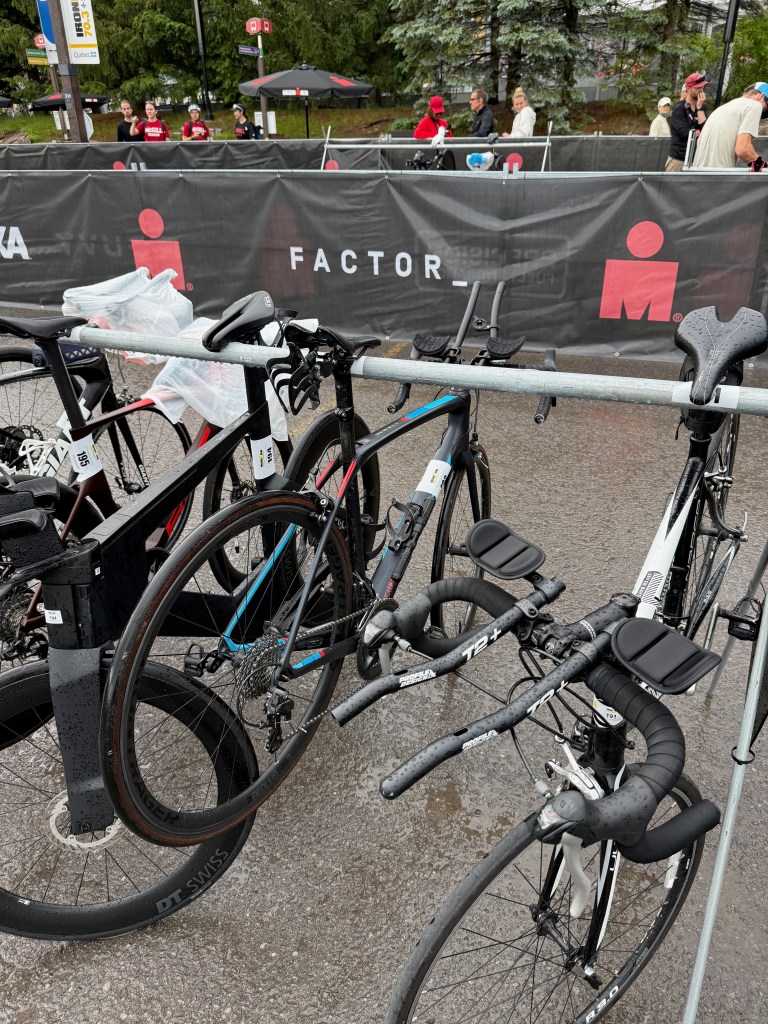
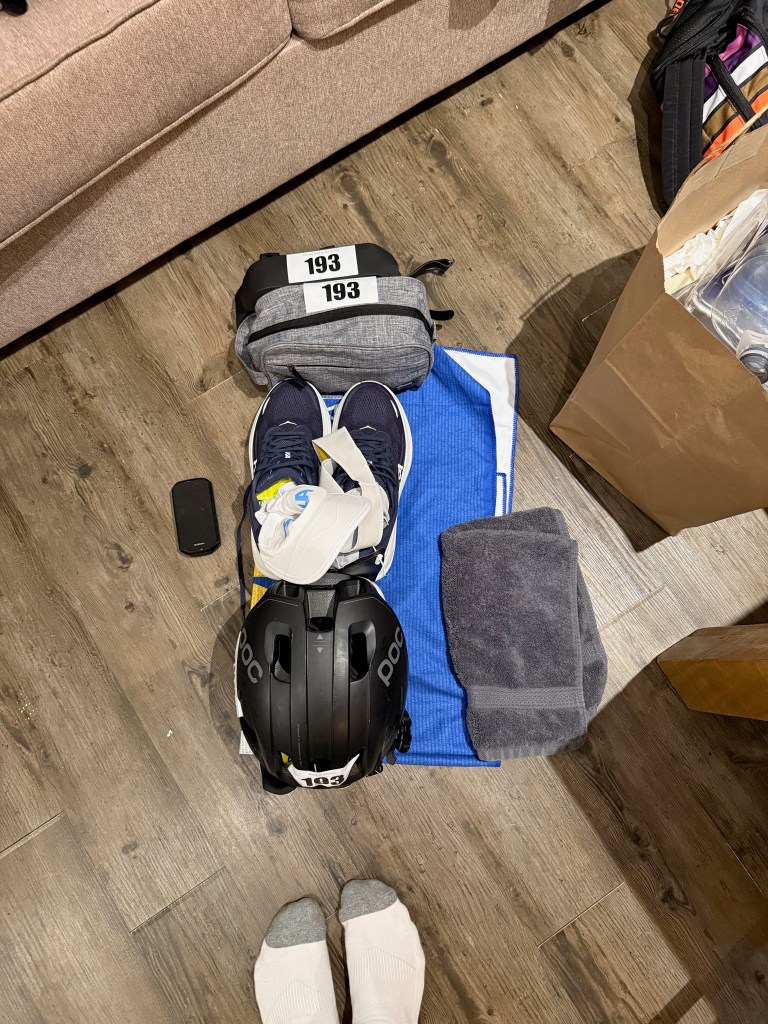
I woke up early, walked down to transition with my gear, checked my bike, topped up a few last-minute items, and then walked right back to the condo for breakfast.
One thing I definitely got wrong was the coffee.
I was paranoid about getting a caffeine-withdrawal headache before the race. During training I had become pretty dependent on caffeine, and the last thing I wanted was a headache halfway through the bike. Because of that, I had two coffees that morning.
At the time it seemed like a great idea.
In hindsight, I think it explains why I had to pee constantly throughout the race.
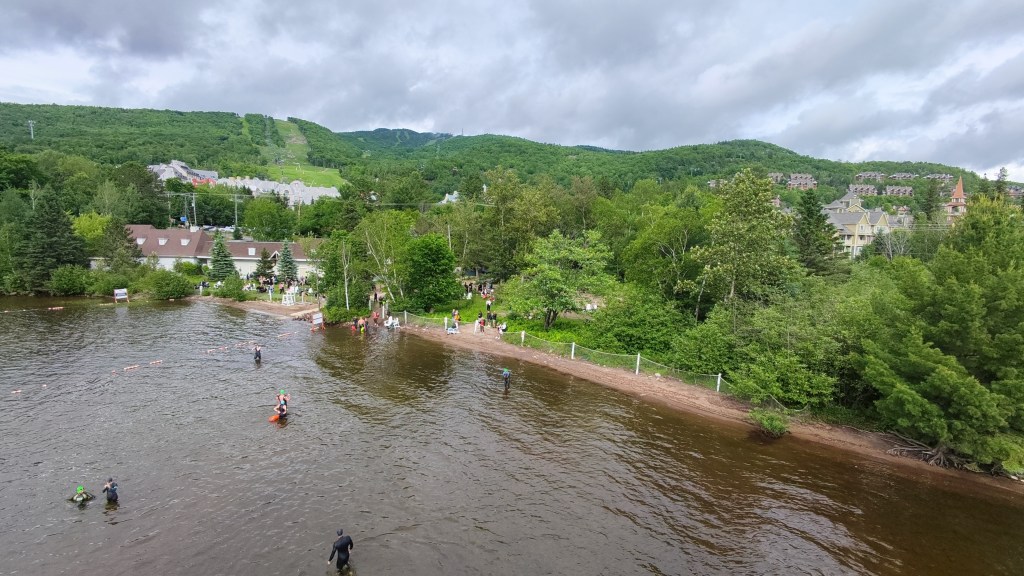
After breakfast I headed back down toward the swim start. The weather was about as good as I could have hoped for. The water temperature was around 16.8°C. The air temperature was comfortable, there wasn’t much wind, and the lake looked calm.
Looking back now, I don’t think I fully appreciated how lucky we were with the conditions.
The weather ended up being almost perfect all day.
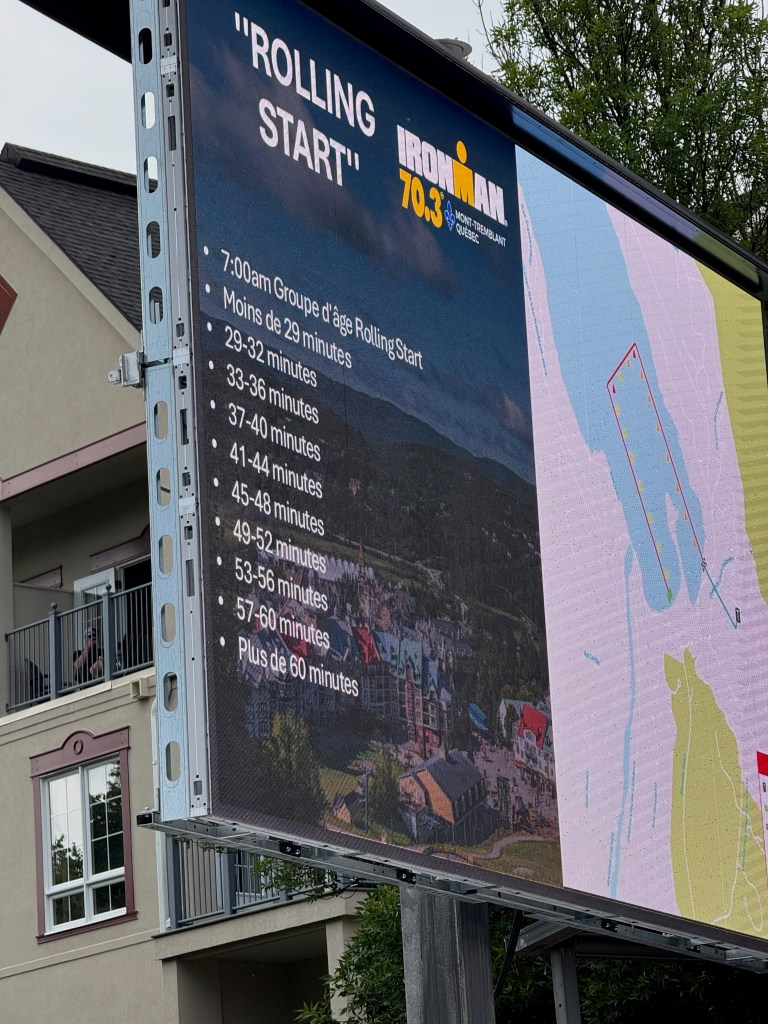
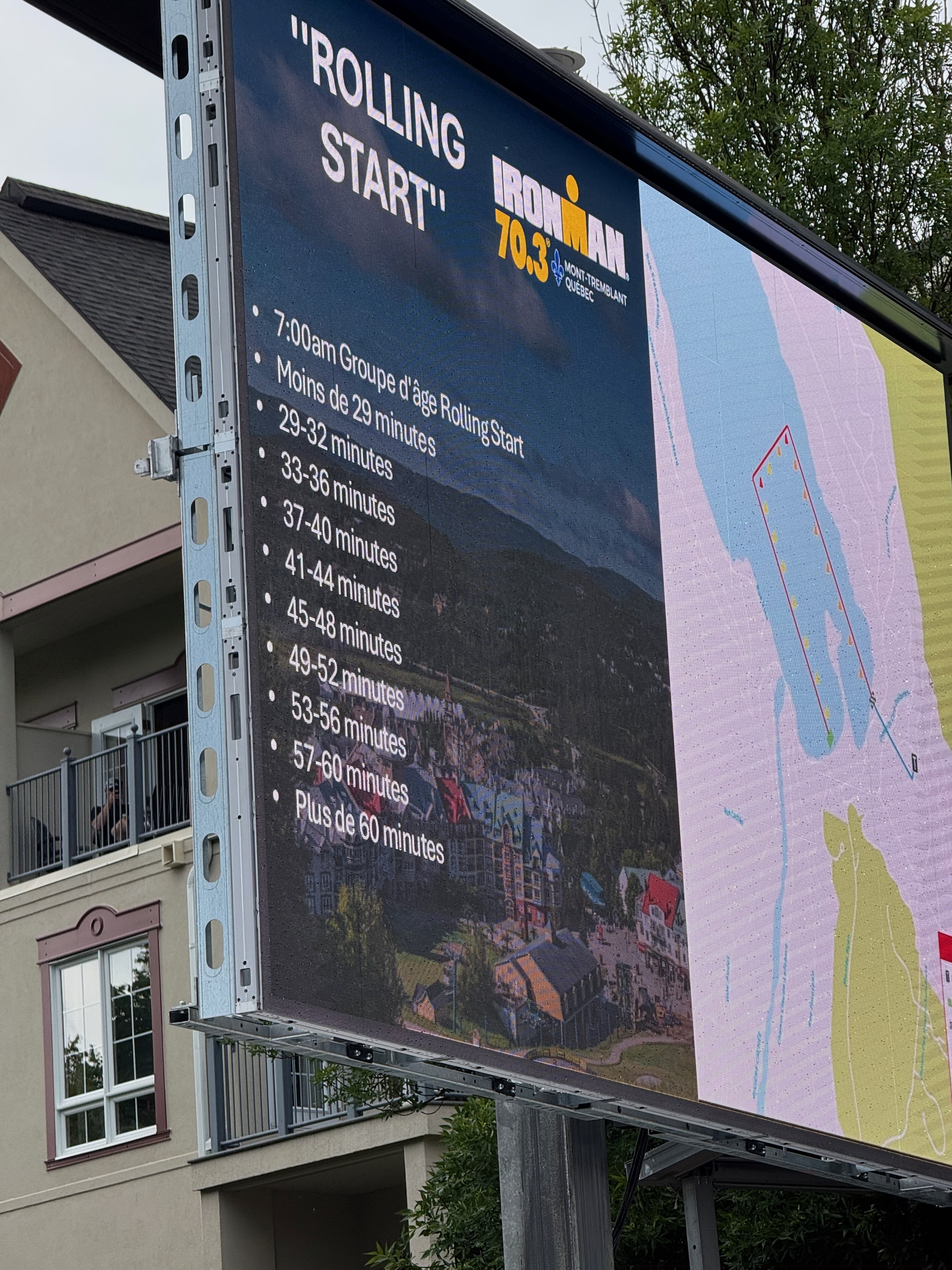
The biggest decision I made that morning was where to seed myself for the swim.
Based on my recent open-water experiences, I had very little confidence. My goal wasn’t to have a good swim. My goal was simply to get through the swim.
Because of that, I placed myself in the 55-minute to 60-minute self-seeded group. It was one of the final groups entering the water.
At the time, that felt like the safe choice.
In hindsight, I sold myself short.
As I would eventually learn, my swim time was 47:51, which meant I probably belonged much farther forward.
Standing on the beach waiting for my wave, I was nervous but also strangely calm. The goal I’d set on my 40th birthday was finally here.
The bike was ready.
The run course was waiting.
The only thing standing between me and the rest of the day was 1.9 kilometres of open water.
And that was still the part that scared me the most.
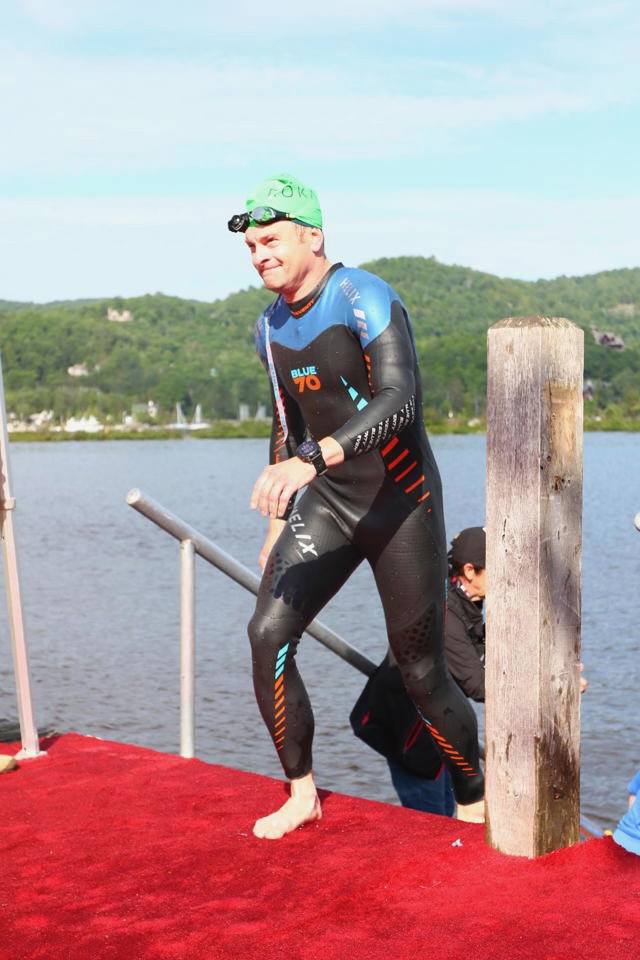
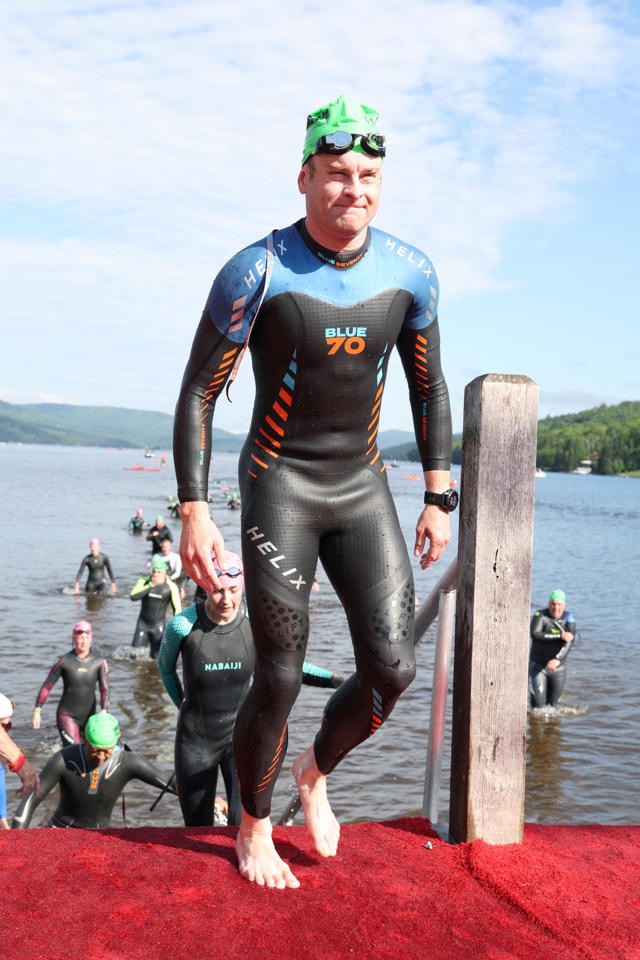
The Swim: 47 Minutes
The swim was the part of the race that scared me the most.
When race morning arrived, I seeded myself in the 55-minute to 1-hour swim corral. Looking back, I probably sold myself a little short there, but at the time my goal wasn’t a fast swim. My goal was simply to survive it.
The first few hundred metres were exactly what I expected: cold water, elevated heart rate, and a lot of anxiety. The water temperature itself wasn’t bad, but the feeling of being surrounded by hundreds of swimmers while trying to settle into a rhythm was something I had never experienced before.
Very early on I realized I was not going to swim the entire course continuously.
On the first outbound leg, I stopped several times and held onto the course buoys. I would grab a buoy, catch my breath, settle my heart rate, and then continue. The volunteers were fantastic and the other swimmers simply swam around me.
By the time I reached the turn and started heading back toward shore, something changed.
The cold-water shock was gone.
I was no longer fighting panic. I was simply dealing with fatigue.
I still stopped a few more times on the return leg to rest on the buoys, but mentally I felt much better. I could put my face in the water comfortably, sight the next buoy, and continue moving forward.
The biggest lesson from the swim was that I didn’t need to conquer it all at once. I just needed to keep moving from one buoy to the next.
When I finally reached shore and stood up, I wasn’t thinking about my time. I was thinking about one thing:
I had completed a 1.9 km open-water swim.
Out Of The Water: Transition
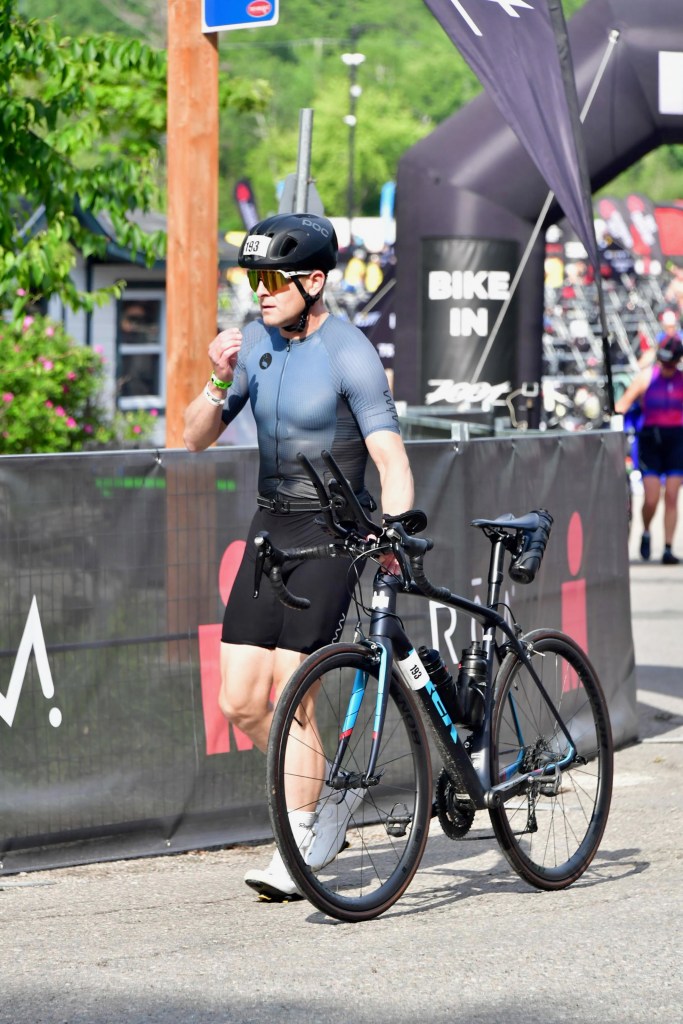
One thing nobody really explained to me beforehand was what happens when you actually finish the swim. After 47 minutes and 51 seconds, I finally reached shore and made my way up the swim exit ramp. I was tired but relieved. The part of the race I had feared most was over.
Then complete confusion set in. As I came up the red carpet, volunteers started directing athletes to lie down on their backs. I had no idea what was going on. I remember thinking, “Am I supposed to do this?”
Before I could really process anything, I was flat on my back and a volunteer was pulling my wetsuit off. When I say pulling, I mean ripping.
In what felt like about four seconds, my wetsuit was completely off. It was honestly impressive. She had clearly done this thousands of times before.
As she handed me my wetsuit, she looked at me and yelled something along the lines of:
“You got this, buddy! Well done, sir!”
And then she basically launched me back into the race.It was one of those small moments that stuck with me all day. The volunteers at Mont-Tremblant were incredible. Every single one of them seemed genuinely invested in helping athletes succeed. From there, I started the long run toward transition.
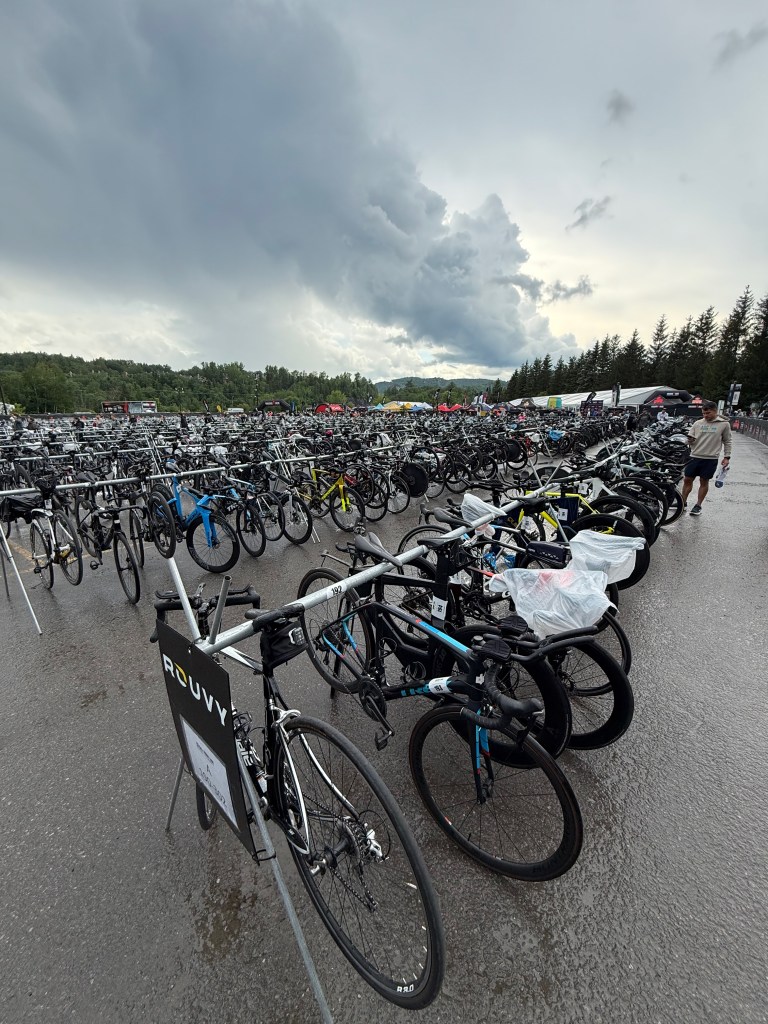
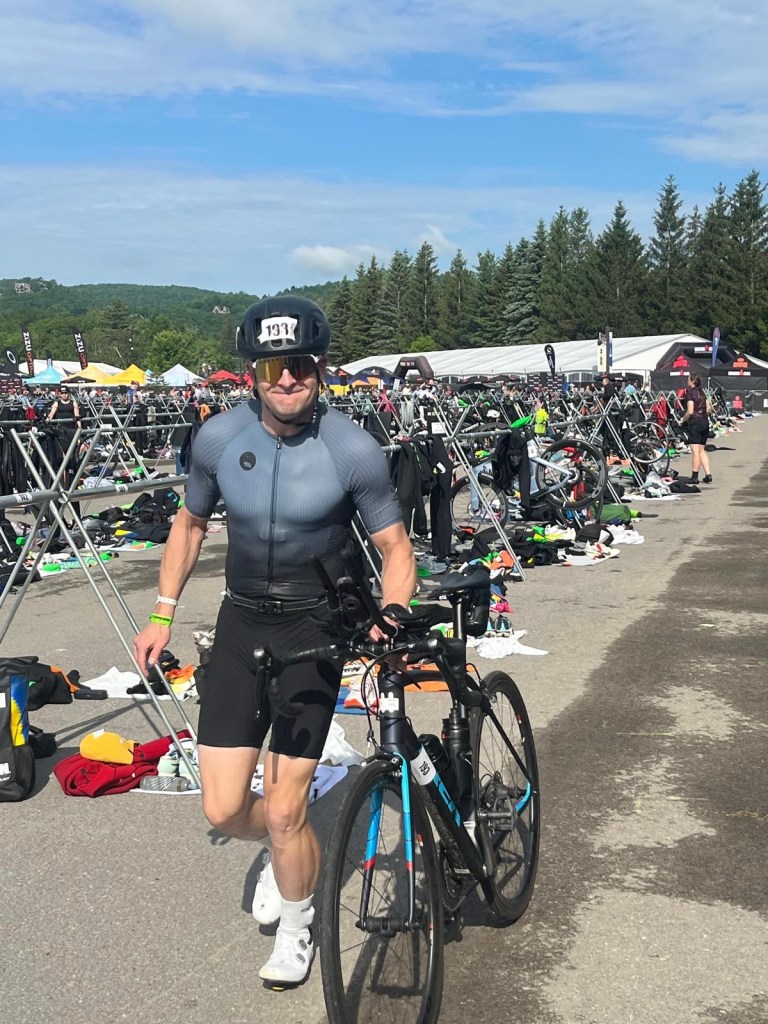
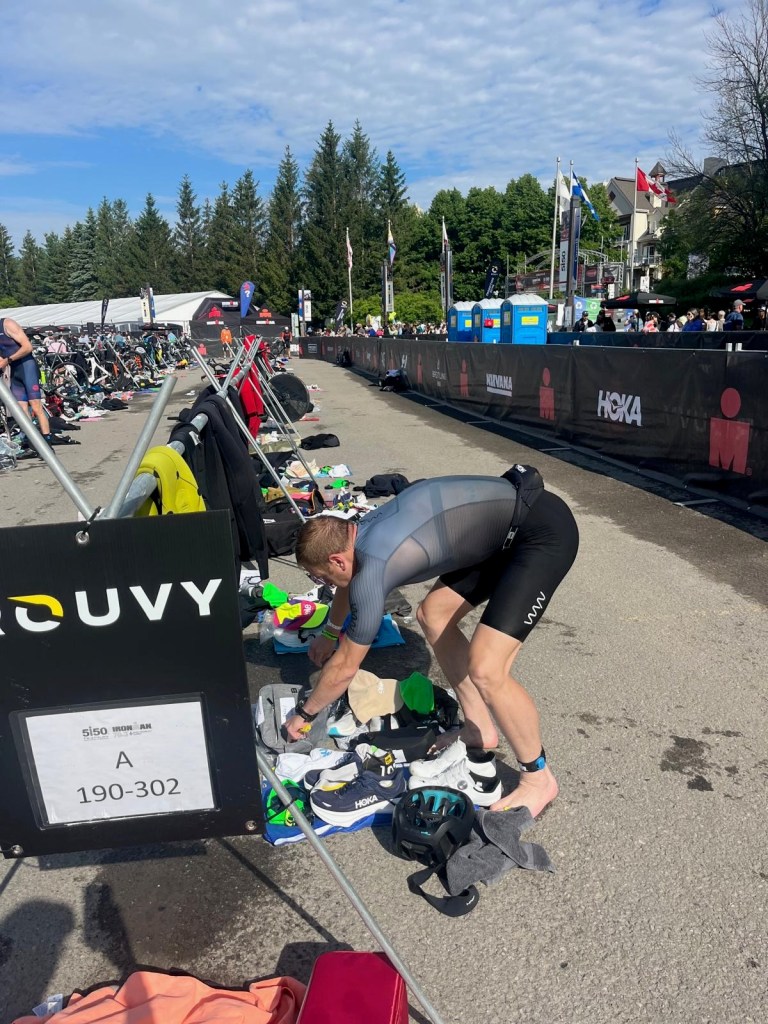
I remember being surprised by how far away the bikes actually were. On TV the transitions always look compact. In reality, it felt like I was running forever before I finally reached my rack position.
Looking back at the course data, that transition covered a lot more ground than I appreciated at the time.
Once I arrived at my bike, I immediately slowed everything down.
A little too much, actually…
I took my time. I put on sunscreen. I reapplied anti-chafing cream. I organized my nutrition. I made sure everything felt perfect before leaving.
At the time it seemed reasonable.
Later, when I compared transition times with some of my friends, I realized they had been in and out in a couple of minutes while I had essentially moved into transition and made myself comfortable.
Still, as I ran toward the bike mount line, one thing was clear:
The swim was behind me.
For the first time all day, I felt relaxed.
Now I was heading into the strongest part of my race.
The Bike : Passing Half of Quebec
The moment I got onto the bike, the entire day changed.
For months leading into the race, the swim had been my biggest concern. The bike was different. Cycling is where I was comfortable. It was familiar territory.
Within the first few kilometres, I could tell I had seeded myself far too conservatively for the swim.
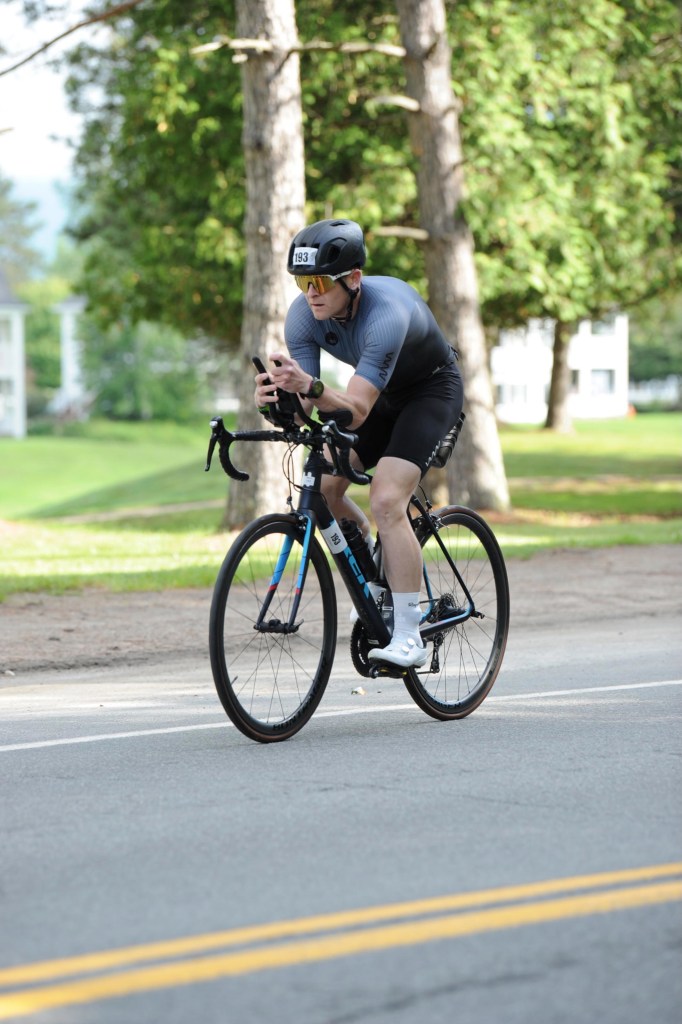
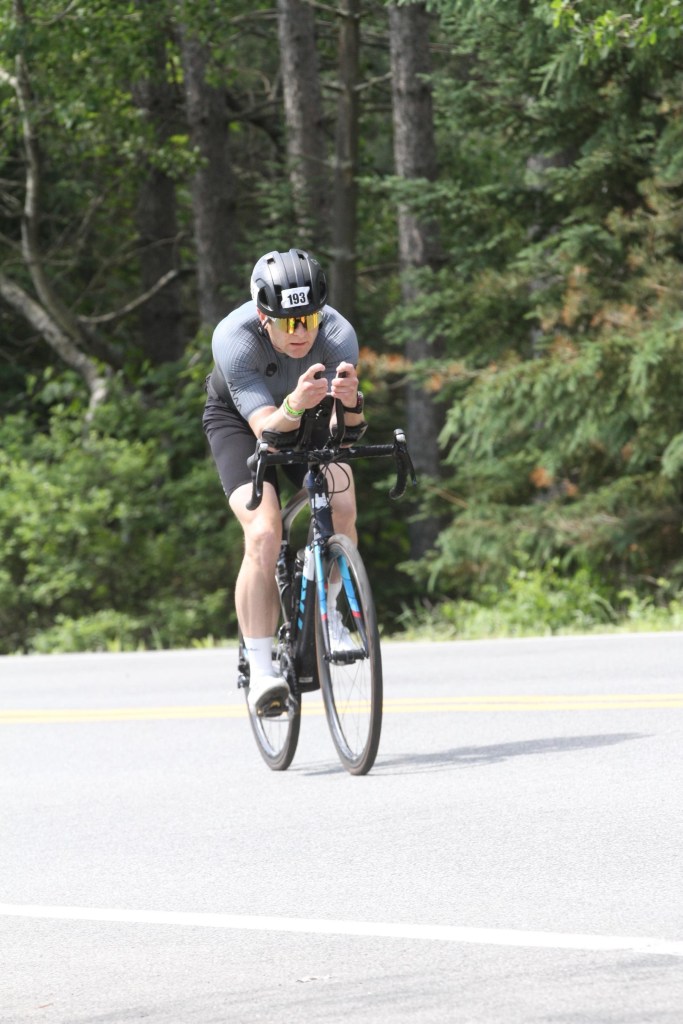
Because I had started in the 55–60 minute swim group, I was now surrounded by athletes who were generally much slower on the bike than I was. It felt like I spent the entire ride passing people.
Obviously it wasn’t actually half of Quebec, but it felt like it.
For nearly three hours I was constantly moving left, calling out “Passing left!” and working my way through groups of riders. Sometimes it was smooth. Other times it was frustrating. On a few of the climbs, athletes would drift across the road or slow dramatically, and I would find myself boxed in behind them.
I probably said “Passing left!” forty times during the ride.
Looking back, I think this was the first real sign that I had underestimated myself on the swim. Had I seeded myself with the 45-50 minute athletes, I likely would have spent less time navigating traffic and more time riding with athletes closer to my ability level.
The bike course itself was outstanding.
Mont-Tremblant is not an easy ride. By the time I reached T2, my Garmin recorded more than 1,100 metres of elevation gain over the 90-kilometre course. There were long climbs, fast descents, and enough rolling terrain to keep you honest all day.
The weather was nearly perfect.
There was some sun, some cloud cover, and very little wind. Looking back now, I don’t think I fully appreciated how fortunate we were.
From a pacing perspective, I was happy with the ride.
My heart rate stayed controlled throughout the ride, averaging 139 beats per minute, and I always felt like I had another gear available if I needed it.
The biggest win of the bike wasn’t my speed.
It was my nutrition.
For months before the race I had spent an absurd amount of time thinking about nutrition, experimenting with different carbohydrate mixes, and trying to figure out what my stomach would tolerate.
On race day, it worked.
I drank three bottles, each containing roughly 100 grams of carbohydrate. I grabbed an electrolyte bottle from an aid station, took a gel, and never experienced any meaningful stomach issues. No cramps. No nausea. No digestive problems.
For a first-time triathlete, that felt like a huge victory.
One thing I did not expect was how often I had to pee.
Before the race, I was worried about dehydration.
During the race, I had the opposite problem.
I stopped to pee three separate times on the bike. One of those stops wasn’t even at an official aid station. I pulled over behind a tree and handled the situation as discreetly as possible (this is a penalty if caught)
Looking back, I suspect my two-race-morning coffees played a role.
The funny thing is that despite stopping multiple times, despite constantly navigating around other riders, and despite more than a kilometre of climbing, I still finished the bike in 3:02:13.
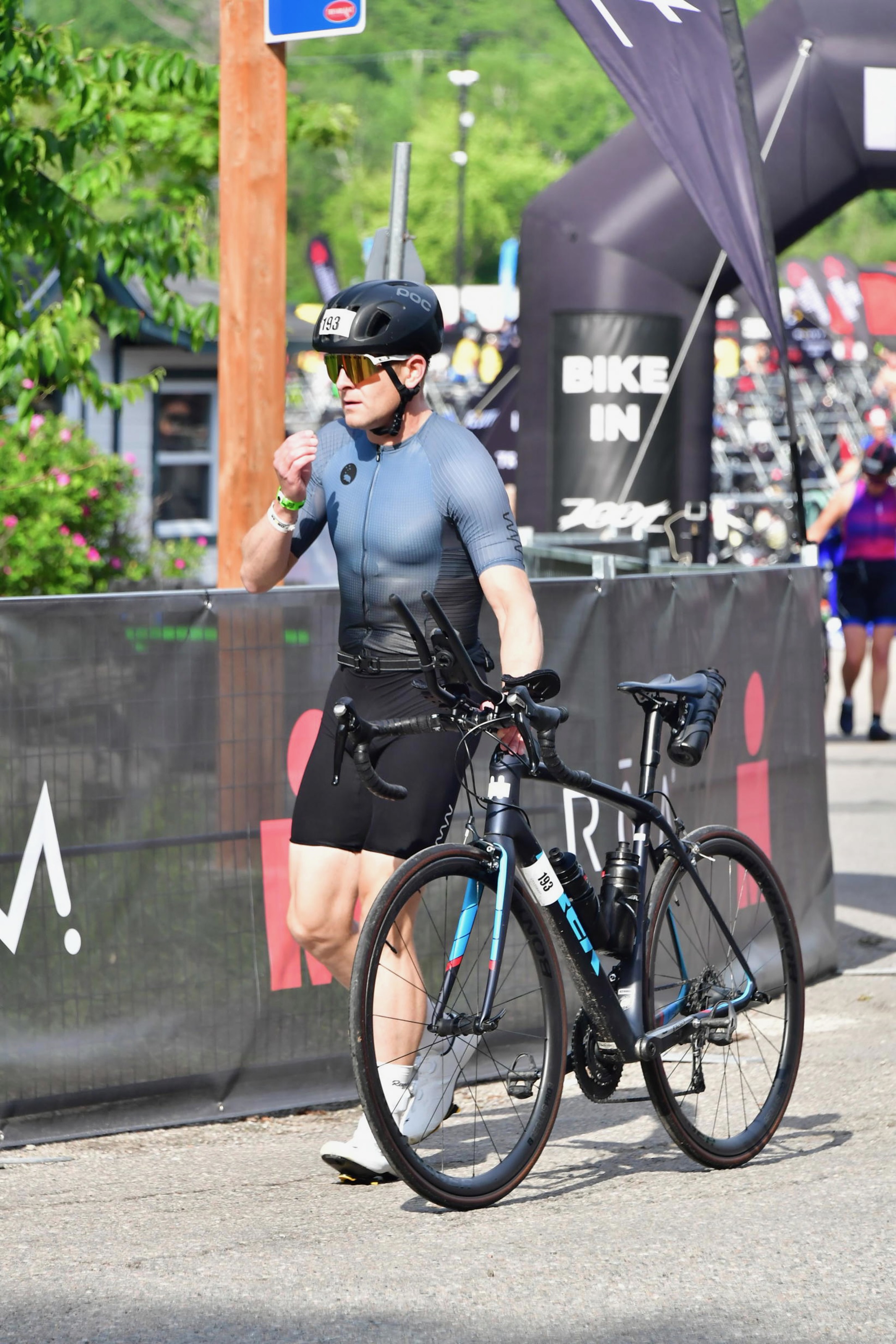
When I rolled back into Mont-Tremblant and approached transition, I felt surprisingly good.
Every experienced triathlete had warned me about “bike legs.”
They told me my legs would feel heavy, awkward, and completely disconnected when I started running.
I was fully expecting disaster.
I had no idea that the next surprise of the day was waiting for me in T2.
The Longest Transition in Mont-Tremblant History
As I rolled into T2, I was prepared for one thing:
Wobbly legs.
Every experienced triathlete I spoke to had warned me about them.
Jeff mentioned it.
Pedro mentioned it.
Pretty much everyone mentioned it.
The way they described it, I expected to get off the bike and immediately start running like a newborn deer learning how to use its legs.
It never happened.
I dismounted, started jogging toward transition, and honestly felt pretty normal.
The first couple of kilometres of the run would end up being a little slower as I settled in, but there was no dramatic adjustment period and no major shock to the system.
Unfortunately, feeling good created a different problem.
I got comfortable.
Very comfortable.
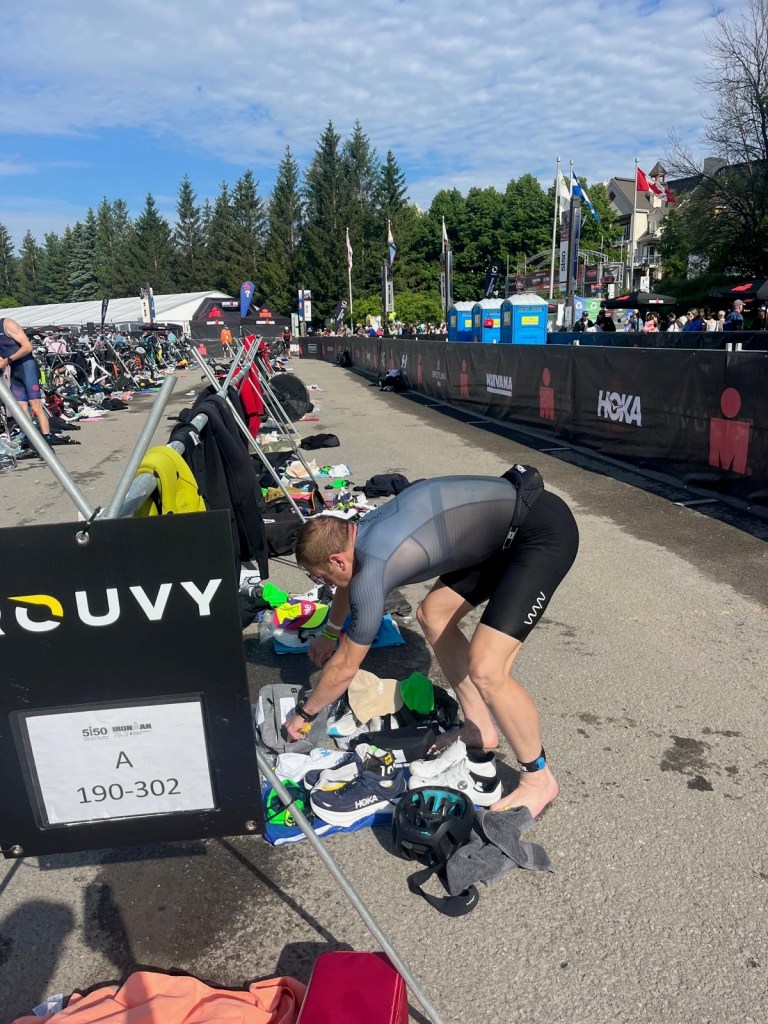
When I reached my transition spot, I essentially forgot I was in a race.
Looking back at my official results, my T2 time was 12 minutes and 38 seconds.
Twelve minutes and thirty-eight seconds.
To put that in perspective, some athletes complete an entire transition in under two minutes.
Meanwhile, I was apparently preparing for a week-long expedition.
I changed socks.
Not because I had to.
Because I wanted to.
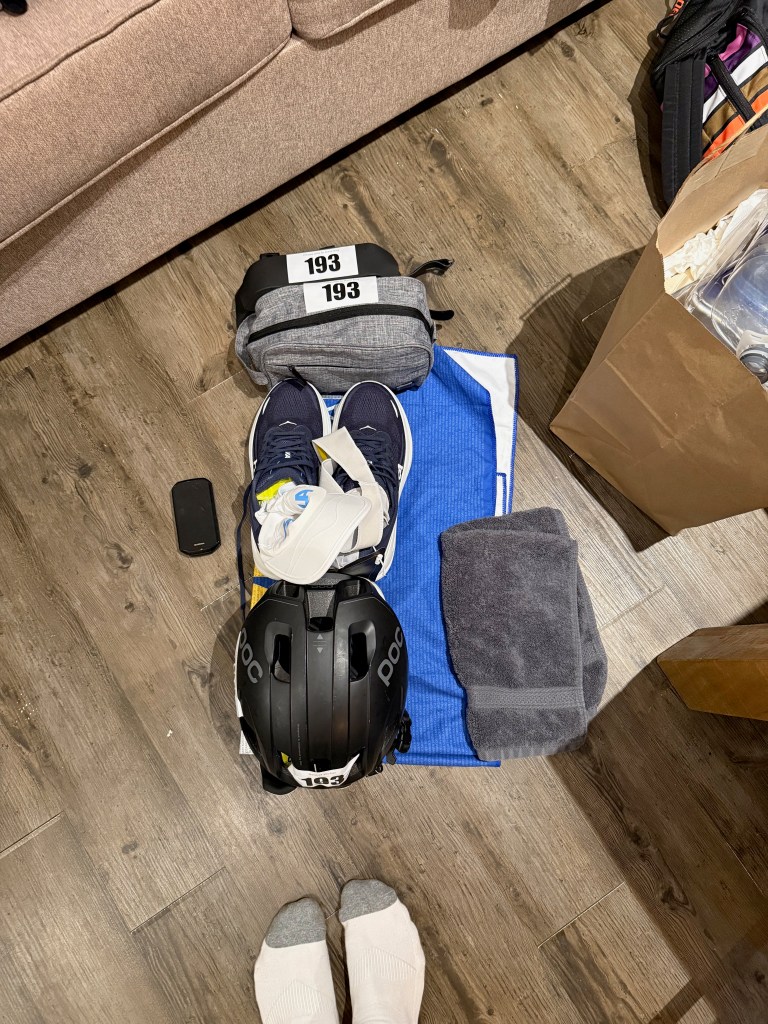
I took off perfectly good cycling socks and carefully replaced them with my long HOKA running socks.
This turned out to be more complicated than expected because I had an ankle timing chip to work around. There was pulling, adjusting, repositioning, and generally far more sock-related activity than should ever occur during a triathlon.
Then came the sunscreen.
More sunscreen.
Then anti-chafing cream.
More anti-chafing cream.
Then the chamois cream.
Then I needed baby wipes because I had chamois cream on my hands.
Then I needed to organize my gels.
Then I needed to double-check everything.
At no point during this process did I seem concerned about the clock.
The funny part is that all of this was driven by advice I had received before the race.
At some point, someone had told me that chafing could ruin your day.
Another person had mentioned hot spots.
Someone else had talked about skin irritation.
As a first-time triathlete, I absorbed all of it.
By race day, I had become completely focused on preventing every possible discomfort.
The result?
Absolutely no chafing.
None.
Not on my neck.
Not on my legs.
Not on my feet.
Not anywhere.
The strategy worked perfectly.
The only downside was that I spent enough time implementing it to have a small lunch in transition.
Even now, I can picture my friends asking what I was doing in there for so long.
The honest answer is that I have no idea.
I was moisturized.
I was protected from the sun.
I was thoroughly lubricated.
And eventually, after twelve minutes and thirty-eight seconds of preparation, I finally headed out onto the run course.
For the first time all day, there were no more unknowns.
The swim was done.
The bike was done.
All that remained was a half marathon between me and the finish line.
The Run: Better Than Expected
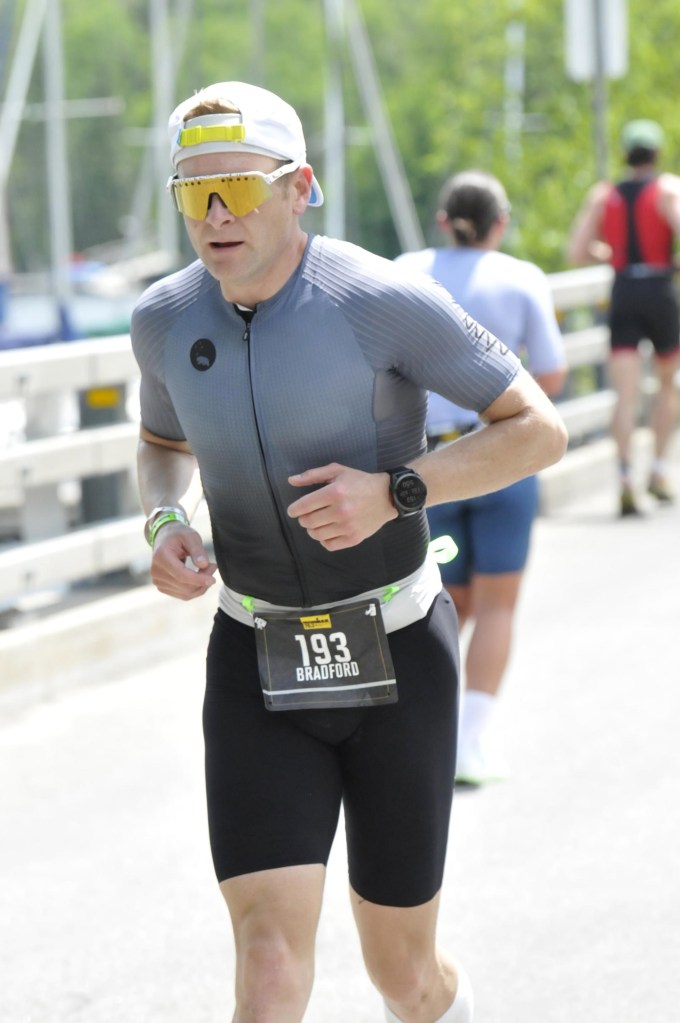
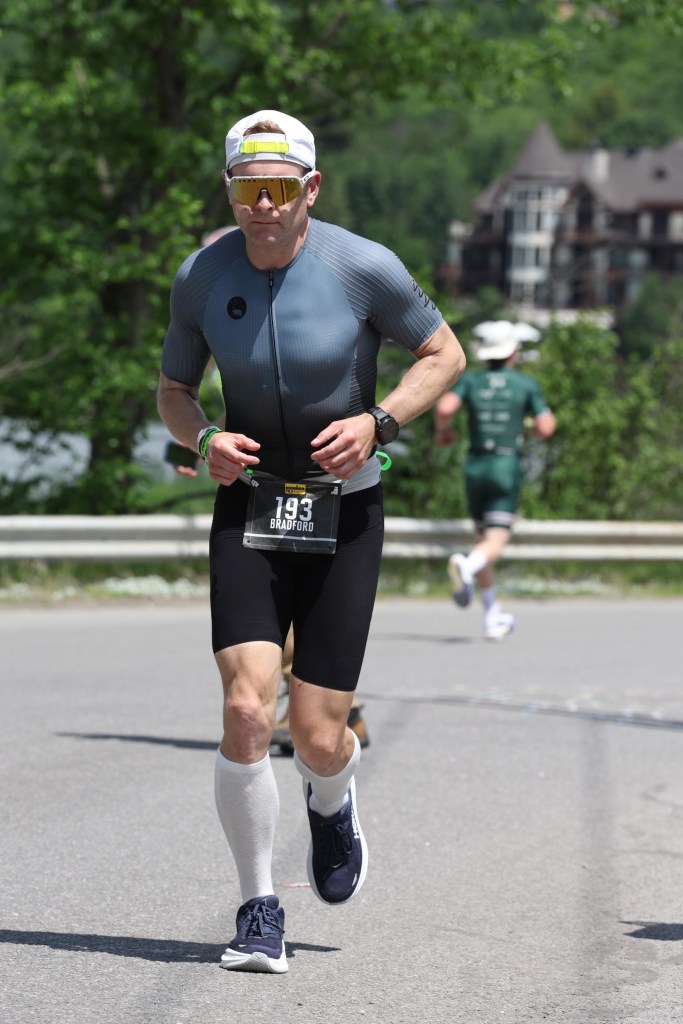
The run was probably the biggest surprise of the entire day.
After months of hearing about “wobbly legs,” cramping, stomach issues, and all the terrible things that were supposedly waiting for me after the bike, I was prepared for a battle
Instead, I felt… pretty good.
Not fast.
But good.
That’s an important distinction.
I wasn’t running effortlessly. I wasn’t setting any records. But I wasn’t suffering the way I had expected to suffer either.
There was no major pain.
No meaningful chafing.
No blisters.
No stomach issues.
No wobbly legs.
The pace was simply the pace I was capable of running after a 1.9 km swim and a 90 km bike ride.
That was one of the biggest lessons of the day.
The limiter wasn’t discomfort.
The limiter was fitness.
I settled into a rhythm early and focused on moving forward.
One thing I noticed almost immediately was how dependent I became on the aid stations. On the bike, I had carried nearly all of my nutrition with me. The run was completely different.
I had no real nutrition plan.
None.
I put a gel in my running shoe before the race so I would remember to take it in transition, but after that I mostly made decisions on the fly.
Whenever I saw the white Maurten CAF 100 gels, I grabbed them.
I liked the caffeine and they seemed to sit well in my stomach.
I also took a couple of the regular Maurten gels and drank fluids at almost every aid station.
Looking back, I probably skipped only a handful of aid stations the entire run.
It wasn’t a carefully engineered nutrition strategy.
It was more of a “that looks good, I’ll take one” strategy.
Thankfully, it worked.
The deeper I got into the run, the more real the finish line started to feel.
At some point, I stopped thinking about pace and started thinking about completion.
The final few kilometres were emotional in a way I wasn’t expecting.
For over nine months, this race had been sitting on my calendar.
As I approached the finish chute, the crowd got louder, the energy picked up, and for the first time all day I stopped thinking about pacing, nutrition, transitions, or swim anxiety.
I just enjoyed it.
The finish line that had seemed so far away on my 40th birthday was finally in front of me.
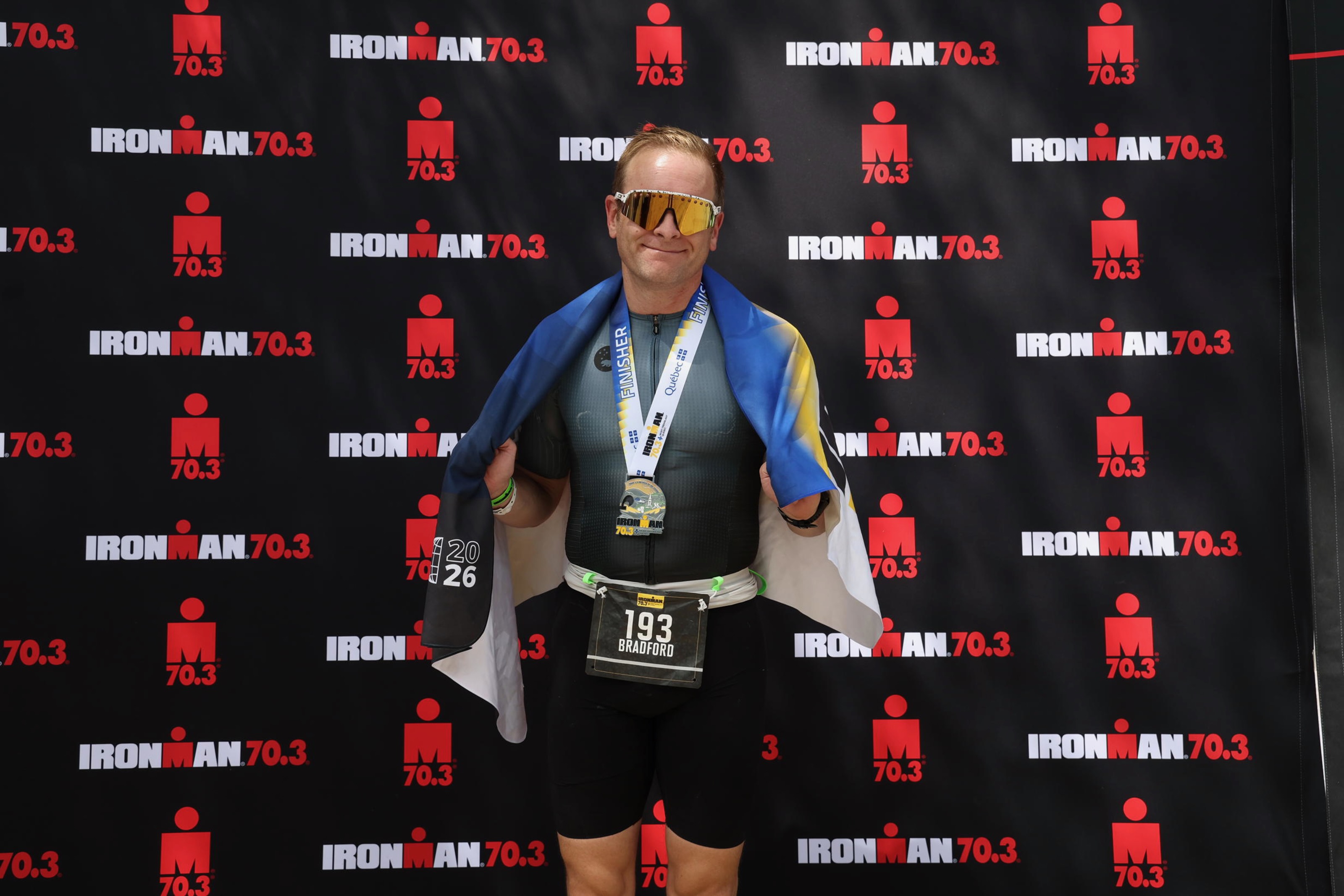
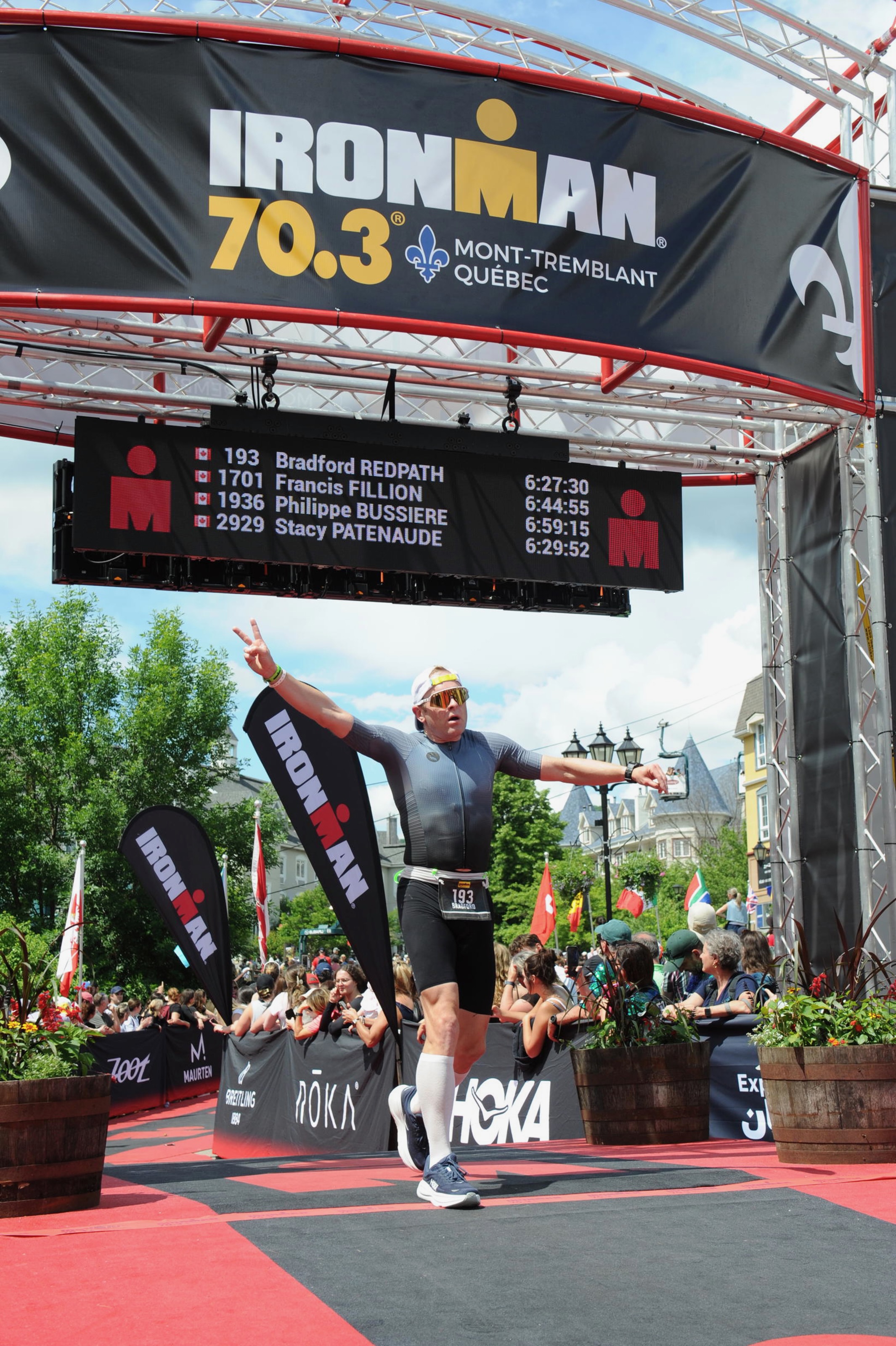
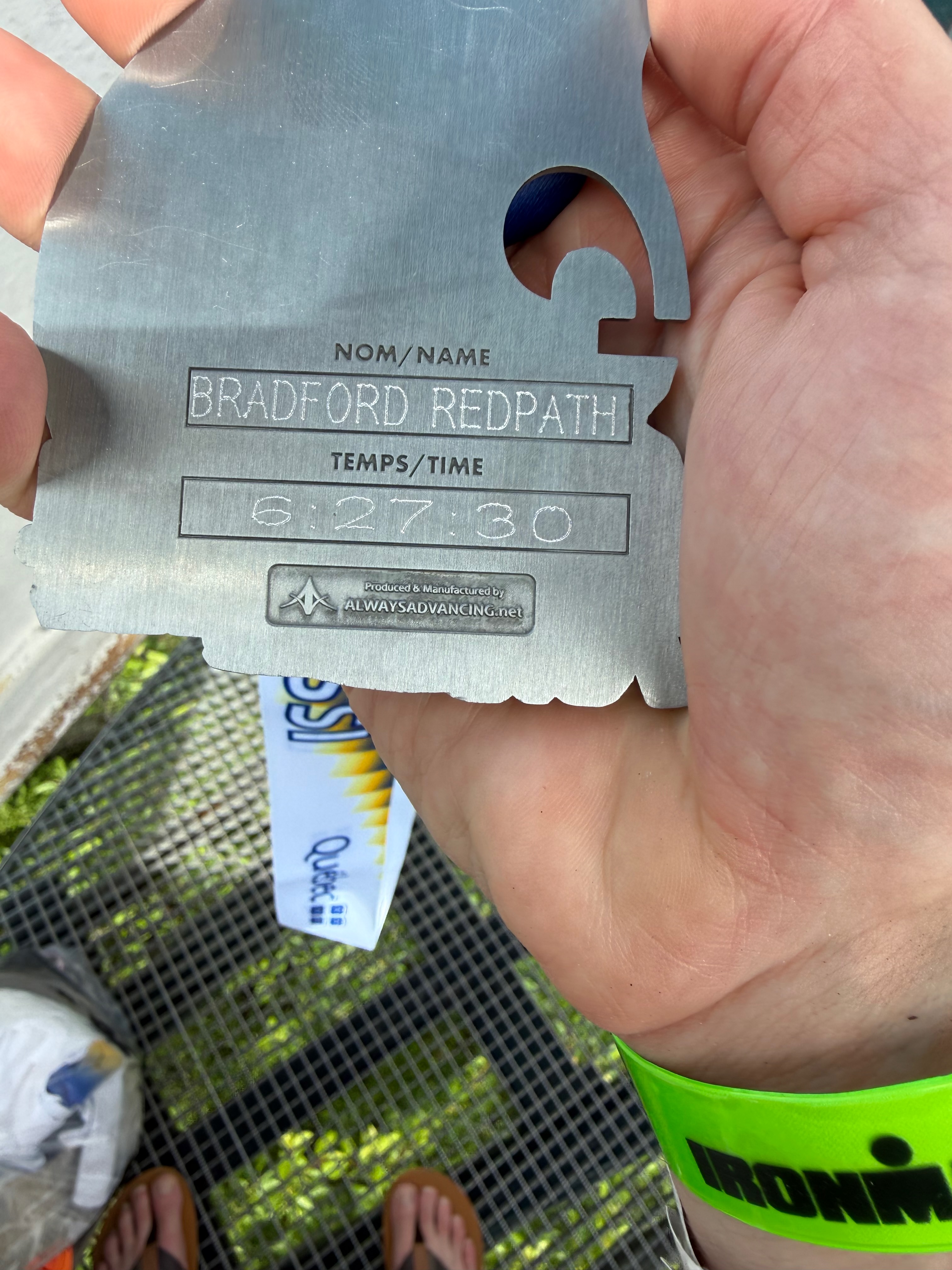
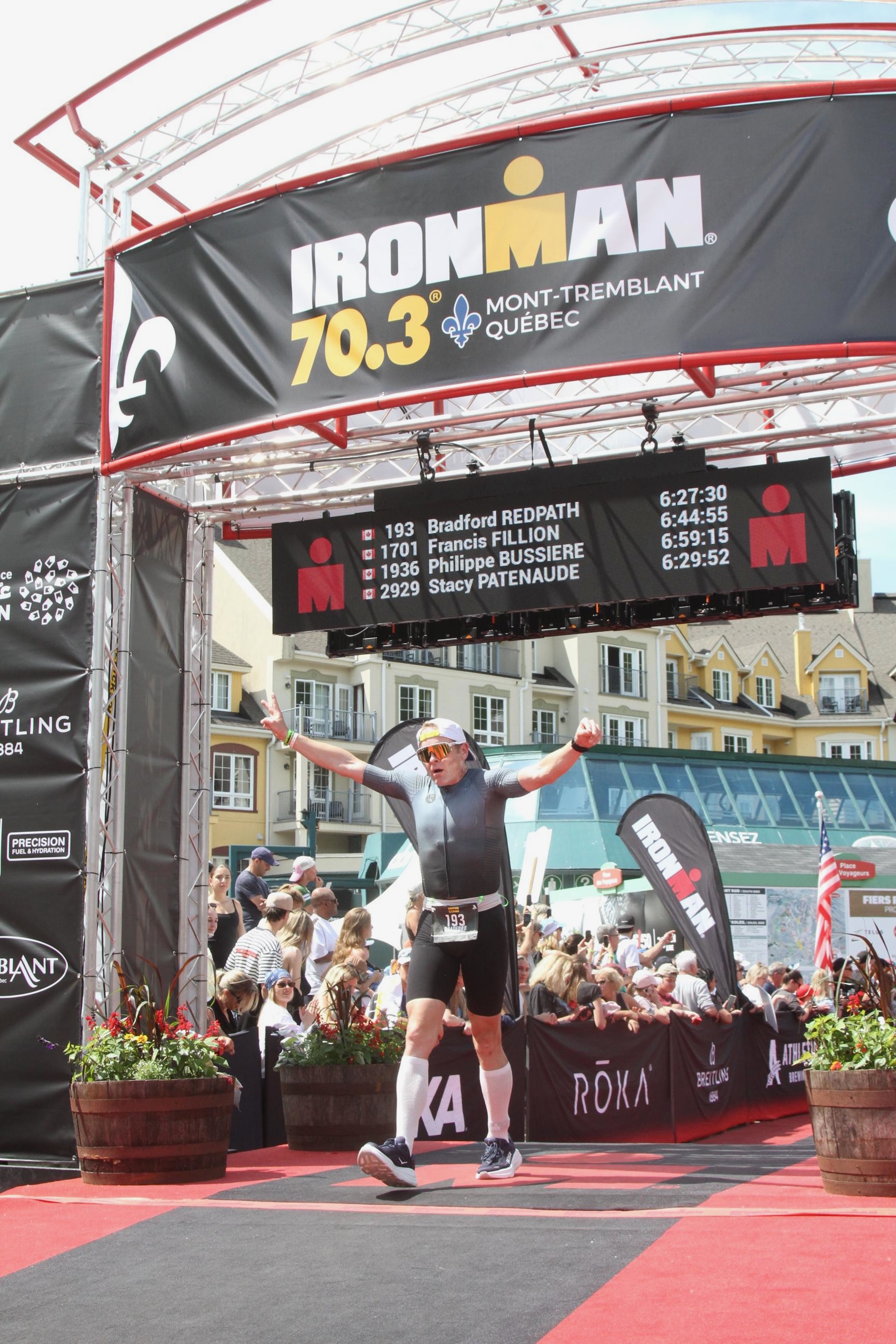
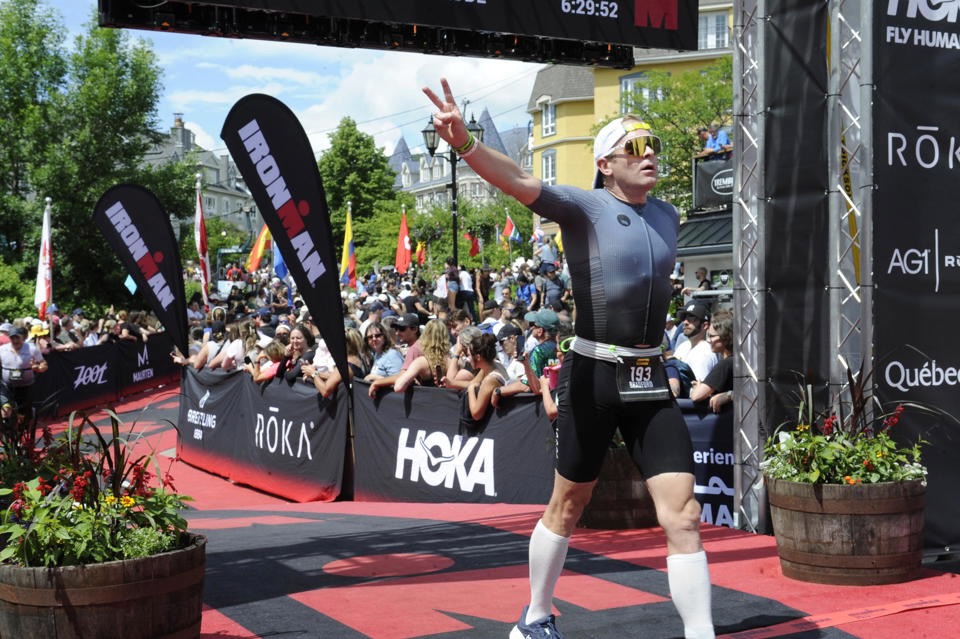
Six hours, twenty-seven minutes, and thirty seconds after entering the water, I crossed the finish line of my first IRONMAN 70.3.
 Bradford Redpath | IRONMAN 70.3 Mont-Tremblant 2026